L. Hunter Lovins
To Rise With the Challenge of Our Time
Legendary leader and honored pioneer of the sustainability movement Hunter Lovins fights for “a finer future”
Hunter Lovins is a force of nature. A lawyer, professor, author, policy advisor, activist, and founder and president of several organizations dedicated to sustainability, she has been at the forefront of the sustainable development movement for over 40 years. Her lifelong work in the field garnered her such accolades as being named a “green business icon” by Newsweek and a millennium “Hero of the Planet” by Time Magazine. Among other honors, she has also received the Right Livelihood Award and the Leadership in Business Award.
Lovins’ groundbreaking achievements include founding the Rocky Mountain Institute in 1982, a non-profit research center with the mission to “transform global energy use to create a clean, prosperous, and secure low-carbon future.” She is also the current president of Natural Capitalism Solutions, another nonprofit internationally recognized and revered for its groundbreaking insights in the field of sustainable development. She has also co-authored 14 books, including “A Finer Future: Creating an Economy in Service to Life.”
When we sat down to talk, she had just arrived by plane to teach a class at Bard College’s MBA in sustainability program. On her flight, she acted as a first responder when a passenger began experiencing heart attack symptoms. “Wow,” I say. “Are there any other qualifications we don’t know about? You seem to have so many.”
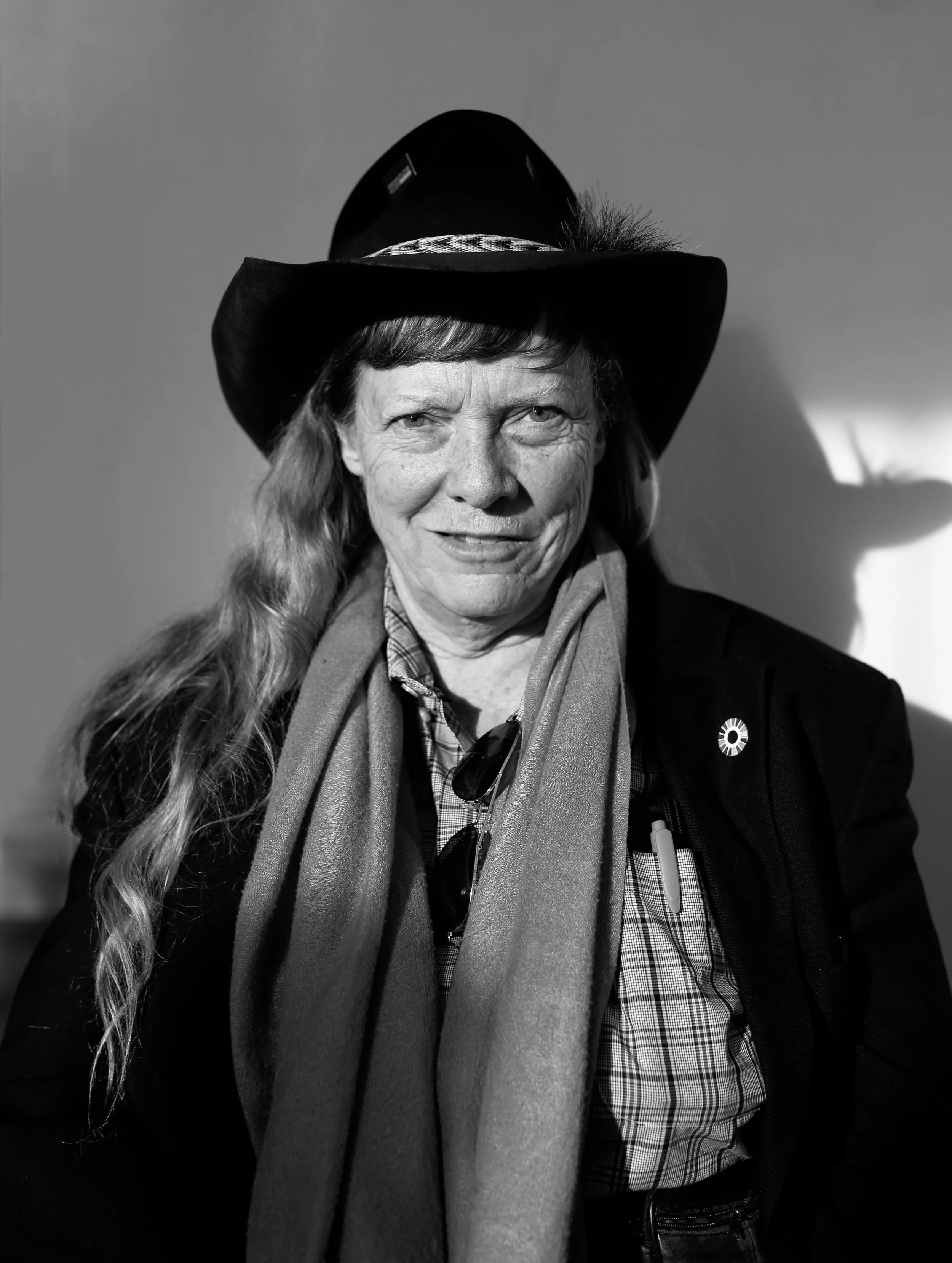
“I don’t know,” she responds. “I was a firefighter for over 15 years.” She started fighting fire at her Colorado high school. Most rural fire departments are members of the ambulance, she explains, so she wore both hats. She recalls one instance when she saved a man from choking. “I did the Heimlich and he popped the piece of steak, breathing again,” she retells. “I patted him on the back, told him to eat a little more carefully, went back to my whisky.”
“The earth has a fever”
When she finds herself in situations where medical attention is needed, she knows when to act based on the symptoms in front of her. I ask her what symptoms she sees in the sustainability world that crucially need acting upon. “Climate change,” she responds immediately. “We’re warming. The earth has a fever. And fevers that get too high are fatal. Climate change will destroy life as we know it on this planet if left untreated.”
It can be overwhelming to hear such daunting words, which we do so often hear. But the key word is “if.” She continues: “We [do] have all medical interventions to resolve the crisis: i.e., stop putting carbon dioxide in the atmosphere by shifting to renewable energy; take the excess carbon dioxide out of the atmosphere by using regenerative agriculture. In both cases, it’s profitable. So, let’s go. We have all the technologies we need; let’s implement them.”
The sustainable investment philosophy of holistic management
So, how does this happen? Beyond being an expert in the field of sustainability, Lovins has been especially monumental as a leader in sustainable business. Her model is that these sustainable solutions that we have access to make financial sense. So why are more companies not getting on board? “Apathy, inertia, inattention,” she says. “A lack of responsibility.” Companies thinking, “’climate change is not my problem.’” The thought that “the government ought to do something about it, not [the company].” But a growing number of companies are realizing that implementing climate protection measures is, in fact, better business; that they’ll actually make more money that way. That’s the most important leverage point – the economic factor – to creating a behavioral change. And once the behavioral change happens, morality follows. “Making money is awfully good proof of concept.”
What can everyday people do?
When I ask her this question, she advocates education and proactivity. “Google the science of climate change, and then DOT – Do One Thing.” Burning fossil fuels is 60-70% of what’s driving climate change, but refrigerants are also contributors. So if you have a leaky air conditioner, change it, she says. As an individual, how we engage with agriculture is important. “Industrial agriculture is a driver of climate change, and climate change is threatening agriculture as we know it: increasing droughts and heatwaves. “ She calls it “Global weirding. Farmers can’t rely on normal climate patterns they could before; there are incredible heatwaves, fires, and floods. The more we can localize agriculture and the more we can shift to organic, and better regenerative, now, rather than being a contributor to climate change, you’re a part of the solution.” Taking carbon out of the air and putting it back in the soil, profitably. So to the extent that it’s profitable, this stuff can go to scale.
So, yes: eating locally, learning about farmers markets, and supporting your local agricultural sector really is important.
These are a few operations she suggests buying from: Brown’s Ranch, White Oak Pastures, Polyface farm, or whatever local producer you have in your area that is managing the land holistically, regeneratively. By buying from them, “you are keeping money in the local economy, you’re making their holistic, regenerative practices more profitable, more viable, and the food will taste better.”
Fereshteh Forough
Code to Inspire; Road to Freedom
Creating a “sustainable ecosystem of women”
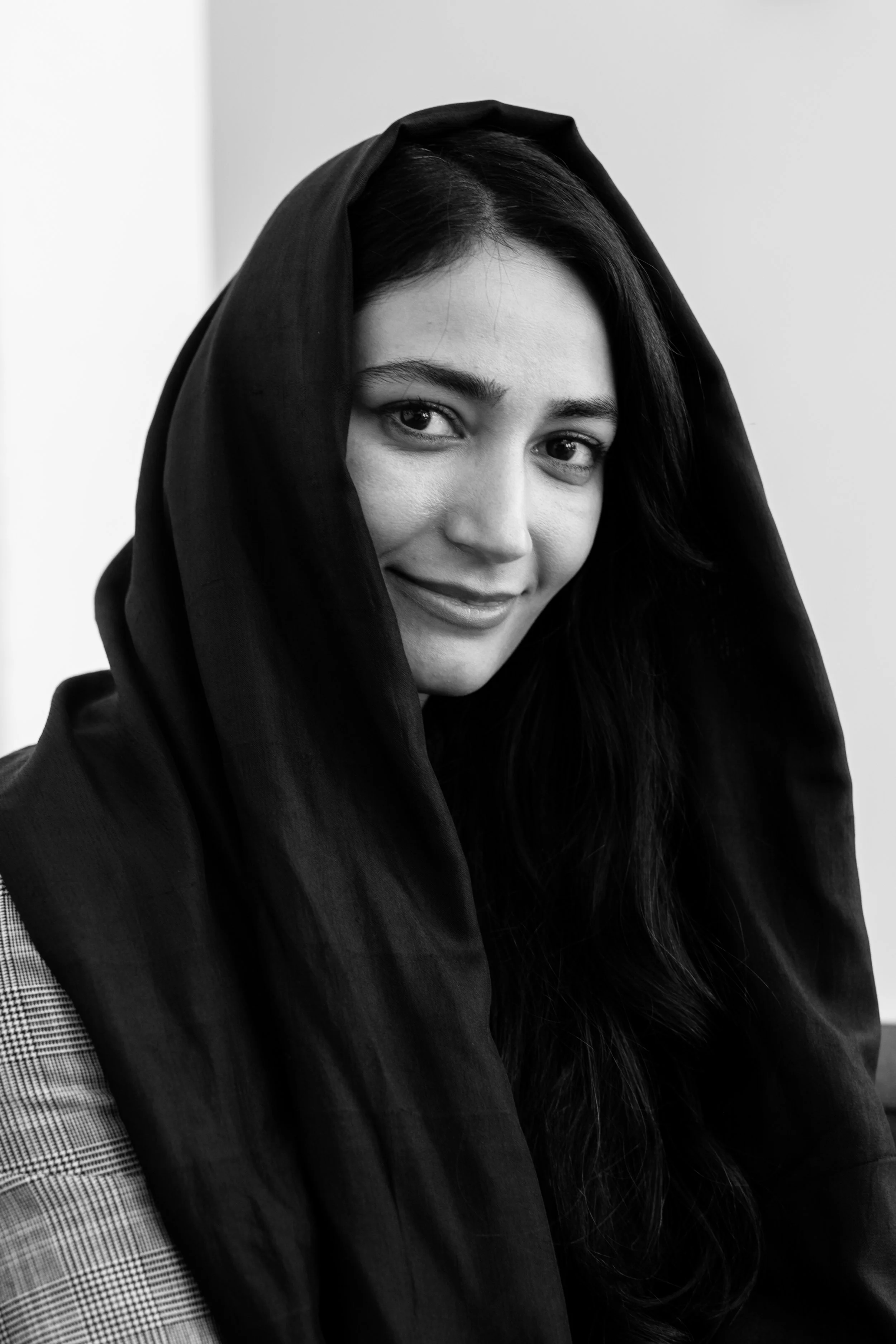
A true trailblazer and visionary leader, Fereshteh Forough has worked tirelessly to promote women’s education and emancipation in Afghanistan through computer science. In 2015, she founded “Code to Inspire,” a coding bootcamp program that provides computer-coding classes for young women in Herat, Afghanistan, in a safe environment free from the threat of harassment and gender prejudice. Her goal: to empower Afghani women and underrepresented communities around the world by enabling them to not only become financially self-sustaining, but also use their voices to achieve freedom.
Forough’s own foray into the world of computer science was somewhat serendipitous. She applied to university expecting to major in a subject relating to her background in literature, like journalism, law, or economics. Instead, she was recruited and admitted into the newly instituted computer science department at a university in Iran. Aided by her English skills, newfound appreciation for the subject, and vivacious determination, Forough excelled in her coursework. She went on to receive her masters in the field at the Berlin Technical University, after which went back to teach at the university she had attended in Iran. Once back, she realized that things hadn’t changed for women in IT. “What I noticed was that [the women] didn’t use their voice, they didn’t step up to engage in class, and there were still much fewer women in the subject than men. They would show up after hours instead of raising their hands in class.” When she saw that the social prejudice and backlash against women in computer science hadn’t changed since she was a student, Forough knew she had to do something about it.
Not Without Challenge
While she was a student, many of Forough’s male classmates had trouble accepting a vocal, outgoing, intellectually determined woman who challenged social norms. She had always been outgoing and outspoken. Having been brought up in Iran, which was a more open society than Afghanistan, she says she had “more personality freedom than [her] classmates, who had been raised under the Taliban regime. You were talking about a regime, the Taliban, that had left the country just one year prior. There were a lot of people that were still very closed minded and conservative about women’s education, and I was totally against [that] tradition.” This upset many men, and she would receive anonymous hate emails in attempts to demotivate her. Nevertheless, she persisted! As a student, she had also became a mentor, the first tutor to translate from English to Farsi (her Engish was better than most, and the classes were all taught in English). At first, the majority of those who showed up to her tutoring sessions were women, but eventually more people joined “because they knew that if they didn’t attend, they were going to fail,” she explains with lighthearted humor.
Working Toward a Social Mindshift
In Afghanistan, women’s roles are very limited, Forough explains. Women are not traditionally the breadwinners; therefore, families don’t invest in daughters as they do with sons. Forough aims to serve this underrepresented community by teaching them skills that they can monetize “so that they become asset to the family instead of a burden.” But it goes further than being financially independent and self-sustaining, Forough stresses. They can bring money for themselves and their families, and they help the economy grow, of course. But, more deeply, “it’s about how women now have a voice in the family. Once the family sees that there’s value in investing in her education and she can now bring money and help them, then there’s also less violence against women.” Families then see the value in having a “healthy family member that can now bring in money to the family.” It’s unfortunately that thwarting violence against women comes from seeing their financial value as opposed to a moral imperative, but this is where the root of that moral societal shift happens; the beginning of the road to freedom for these women. “There’s more incentive to have women on the table. If she can put her hand in her pocket, then she has a stronger and bigger voice. And that’s what we believe; this is the agenda we push for them.”
Breaking Boundaries and Building Confidence
After Code to Inspire gained momentum, Forough noticed coding groups popping up in other cities. “We established this image of being a safe space where women learn to code and we help them secure future employment.” In doing so, they set the example of what’s possible. Of course, breaking boundaries creates anxiety for those benefiting from the status quo. “Men professors are now kind of threatened by the women who ask challenging questions in their universities. One thing I say is never tell students they can’t ask questions. Never thwart their creativity. For a lot of these women, they’re just now finding their voice, and someone is helping them - it boosts their self-esteem.” She reminds male professors and mentors not to feel threatened when this happens. Code to Inspire connects students to the international coding community. “It makes them feel good that someone from another part of the world pays attention to what they write and learn.” Success breeds success.
Connecting and Expanding
Forough has an ambitious vision for the program’s future. Having witness its success, she hopes to expand the program to other cities in Afghanistan, and hopefully beyond. “I proved that this worked,” she says. And she did. The women regularly secure contracts with international companies, often making more than local pay rates. I ask her what her dreams are for the program and where she sees it growing. She responds: “To be honest I would love to expand the program to other countries around Afghanistan, the Middle East, Africa, Central, South Asia, all the other places that look impossible like Afghanistan that have the same problems, because it’s a scalable model. I always think that if you can do something in an impossible place like Afghanistan, it’s very easy to do that in other places in the world. With all the challenges and limitations you’re talking about - cultural, society, security infrastructure, the women themselves, the problems they have within the family – we plant that seed and it grows, and we see that moment.”
What Can You Do To Help?
Finding the right partners is crucial to taking Code to Inspire more internationally, Forough says, “so that we can help as many people as we can worldwide. That’s the ultimate goal.” Forough has spoken extensively and internationally about her work with Code to Inspire. She tells me that she says the same thing when people ask what they can do to help: “When you hear ‘Afghanistan,’ the images that come to mind are war and violence; you won't think about anything else and that's because of the media.” Education and knowledge is crucial, she stresses. “I try to change people's perspectives about Afghanistan; that it's not only a war zone and there are great things happening. I always ask people to be my ambassadors. The story you heard today, my story - share it with three people and ask them to share it with three other people. One person at a time will know there's something like this in Afghanistan.”
Proof of Concept for a “Sustainable Ecosystem of Women”
The second thing she tells people when they ask what they can do to help is to share any opportunities for employment or internships. Afghanistan’s technology market is still growing, so opportunities are few in comparison to those around the world. And it’s not complicated, she explains. The very nature of this field is conducive to securing employment independent of location. “You have a girl with a laptop computer connected to internet and that's it; you get work. Our goal now is figuring out how to create this sustainable ecosystem and pipeline of employment. What we give to these girls turns the wheel and it helps the organization become sustainable: that's a very big goal for us. Once we push that piece of the puzzle, we're ready to extend it to other cities because we're doing something that nobody has done before and we have a proof of concept.”
But Forough, who handles everything from fundraising to public outreach to marketing to social media, explains that the program is in need of experts who can bring necessary expertise to the table and “inspire the team.” In line with her adventurous, ambitious, and humble spirit, she also welcomes any extra help from anyone. So, if you have time to spare, interest in grassroots organizing, a desire to help progress women in tech around the world, and effecting societal openness and freedom for this underrepresented community in a deep way, Forough will openly welcome you in the effort to pave a powerful path to freedom.